Epoxy vs. Tape Striping for Warehouses
Choosing between epoxy and tape striping depends on how your warehouse operates, how much traffic the floor sees, and how quickly the markings need to be put into service. Both systems can work well when they are matched to the right environment, but they solve different problems. In active warehouses, the wrong choice usually leads to early failure, unnecessary maintenance, or markings that do not match the way the facility actually moves people and equipment.
At A Lot of Striping, we help clients compare striping systems based on traffic patterns, shutdown windows, concrete condition, durability goals, and long-term maintenance planning. If you need a broader overview of national service capabilities, you can also review our warehouse floor line marking and striping service page.
When Epoxy Striping Makes More Sense
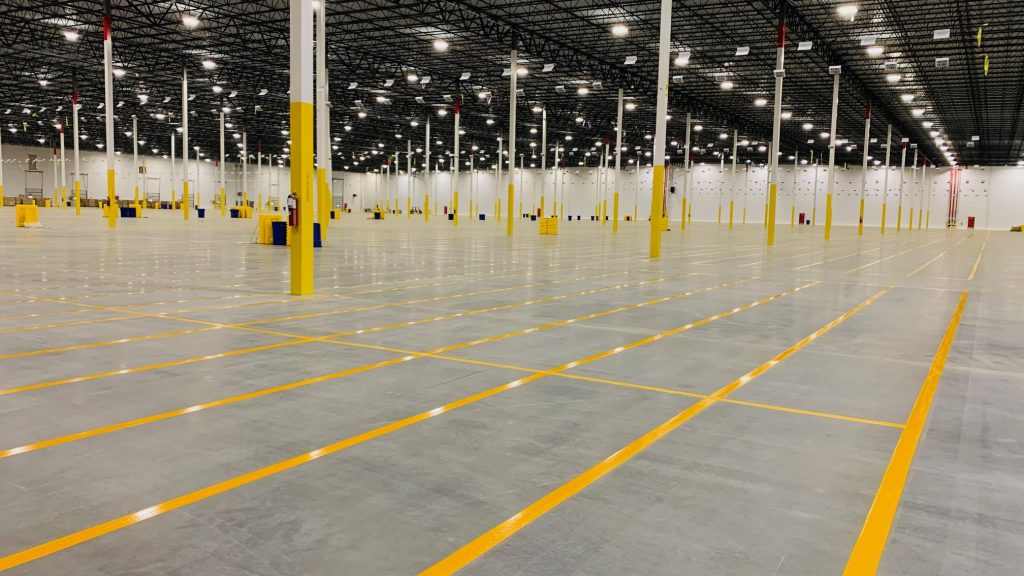
Epoxy striping is usually the stronger choice when a facility needs a more permanent marking system with higher resistance to abrasion, repeated forklift travel, and long service intervals. It is often used in distribution centers, manufacturing plants, and industrial floors where markings are expected to stay in place under demanding operating conditions.
Epoxy systems are commonly selected when the warehouse needs clear aisle lines, staging boundaries, pedestrian paths, and zone markings that can hold up under heavier traffic. Proper surface preparation matters. If the concrete is dusty, contaminated, coated, or already failing, the floor may need cleaning, profiling, or removal work before new markings are installed. That is one reason many facilities pair epoxy projects with a full planning review rather than treating them like a simple repainting job.
For a deeper look at coating performance, durability, and substrate preparation, see our article on warehouse floor marking paint.
When Tape Striping Is the Better Fit
Tape striping is often the better option when speed of installation, minimal downtime, and layout flexibility are more important than a fully permanent coating system. Many warehouses choose tape when they are adjusting travel paths, testing a new layout, reorganizing staging zones, or working in areas where wet coatings would be difficult to schedule.
High-performance warehouse floor tape can work well in lighter-duty areas, in spaces that need fast return to service, or in facilities that expect regular layout changes. Tape can also be a smart option when building management wants cleaner installation with less curing time than epoxy-based striping. The tradeoff is that tape performance depends heavily on floor condition, cleaning practices, turning traffic, and adhesive compatibility with the substrate.
If tape installation is your likely direction, visit our warehouse floor tape installation page and our supporting guide to industrial floor tape.
How to Compare Epoxy and Tape for a Real Warehouse Project
The best system usually becomes clear when the project is evaluated against actual operating conditions rather than general preference. A warehouse that runs constant forklift traffic with tight turning movement, limited cleaning control, and long maintenance intervals will often benefit from epoxy or another more durable coating-based striping system. A facility that needs immediate use, frequent layout changes, or a faster installation window may benefit more from tape in selected zones.
In practice, the decision often comes down to five questions: how aggressive the traffic is, how much downtime is available, how permanent the layout needs to be, what condition the floor is in today, and how the site plans to maintain the markings after installation. We also review whether the markings are for forklift lanes, pedestrian walkways, path-of-egress routes, pallet staging, hazard zones, or temporary operational changes, because each use case places different demands on the striping system.
Many Facilities Use Both Systems
Epoxy and tape do not always compete with each other. In many warehouses, the strongest solution is a mixed system. A facility might use epoxy for primary forklift aisles, high-wear traffic lines, and long-term safety zones, while using tape for temporary staging areas, pilot layouts, 5S changes, or areas that may be reconfigured later. This approach lets the warehouse protect the most demanding zones while staying flexible in spaces that change more often.
That kind of planning is one reason clients also review our warehouse line striping company page when the project is focused more specifically on interior aisle lines, traffic paths, and path-of-egress striping.
Durability, Downtime, and Maintenance Expectations
Epoxy striping generally asks for more prep and more controlled installation conditions, but it can deliver stronger long-term performance when the substrate is properly prepared and the warehouse environment supports coating adhesion. Tape usually reduces disruption during installation, but its long-term results depend more on edge wear, turning traffic, floor cleanliness, and how often the layout changes.
Warehouse managers should compare total maintenance burden rather than looking only at the initial installation method. A faster installation is not always the lower-cost option if the markings need frequent replacement. At the same time, a more durable system is not always the best choice if the layout is likely to change within a short planning cycle. The right answer depends on operating reality, not just product preference.
Which Striping System Is Right for Your Facility?
If the warehouse needs a more permanent marking system for active forklift routes, long-term safety boundaries, and higher-traffic industrial floors, epoxy striping is often the better fit. If the warehouse needs faster turnaround, simpler layout changes, or more flexible zone updates, tape may be the better option. In some facilities, the right answer is a combination of both.
If you want help reviewing your floor condition, traffic demands, shutdown schedule, and recommended striping method, contact A Lot of Striping through our contact page. We can help you determine whether epoxy, tape, or a mixed warehouse striping plan makes the most sense for your building.
Frequently Asked Questions
Is epoxy or tape better for warehouse floor striping?
Neither system is automatically better in every warehouse. Epoxy is often the stronger choice for long-term durability in heavier-traffic areas, while tape is often better when fast installation and layout flexibility matter more.
When should a warehouse use tape instead of epoxy?
Tape is often a good fit when the layout may change, the facility needs quicker return to service, or the markings are being installed in areas that do not justify a more permanent coating system.
Can a warehouse use epoxy and tape in the same building?
Yes. Many facilities use epoxy for primary forklift lanes and permanent safety zones while using tape in temporary or reconfigurable areas.
What matters most before choosing a striping system?
The biggest factors are floor condition, traffic level, turning movement, downtime windows, layout permanence, and the maintenance expectations for the marked areas.
Who should evaluate the striping method for a warehouse?
A contractor experienced in warehouse striping should review the concrete condition, traffic patterns, safety requirements, and operating schedule before recommending epoxy, tape, or a mixed system.